
What Is a Fire Damper? How Fire Dampers Work
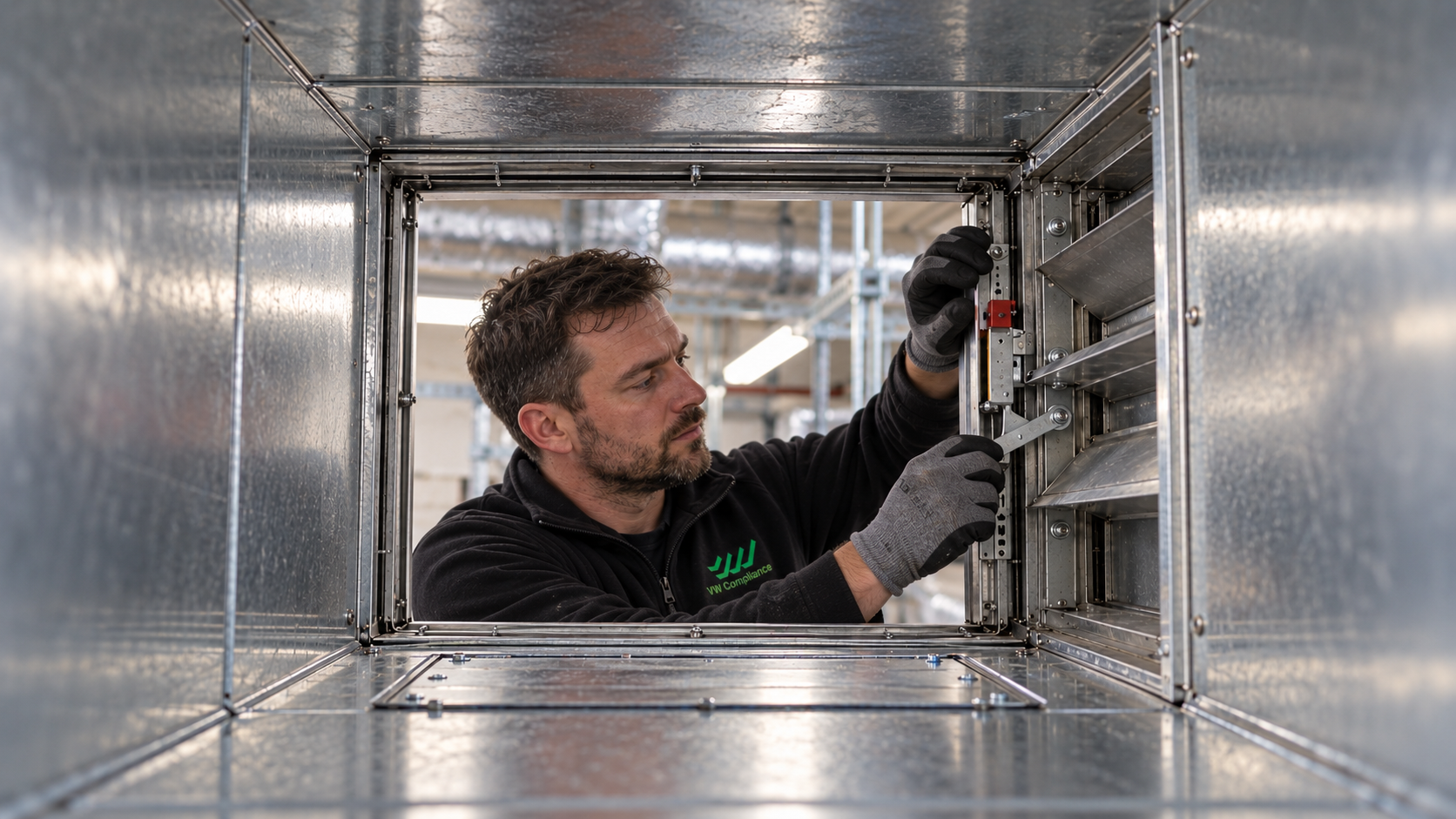
Fire dampers are an important part of a building’s fire protection system, helping to limit the spread of fire through ventilation and HVAC ductwork. But what is a fire damper, and how does it work?
Installed within ductwork where it passes through fire-resistant walls or floors, fire dampers are designed to close when exposed to heat, helping to restrict flames and hot gases from travelling between areas of a building. Fire dampers are a legal requirement under UK building and fire legislation and due to their critical role they play in mitigating fire risks, regular testing and inspections by qualified professionals is essential.
What Is a Fire Damper?
Fire dampers are specialist fire protection devices fitted within ventilation and HVAC ductwork to help control the spread of fire between different areas of a building. they are typically installed where ductwork passes through fire-resistant walls, floors or other compartment barriers.
When a fire generates enough heat, the damper is triggered to close, restricting the movement of flames and hot gases through the ventilation system. This helps preserve the fire resistance of the barrier around the duct and supports the building’s wider passive fire protection measures.
Fire dampers are commonly manufactured using materials such as galvanised steel, stainless steel and intumescent components. The type of specification of a fire damper required will depend on the building, ductwork and fire safety requirements.
How Do Fire Dampers Work?
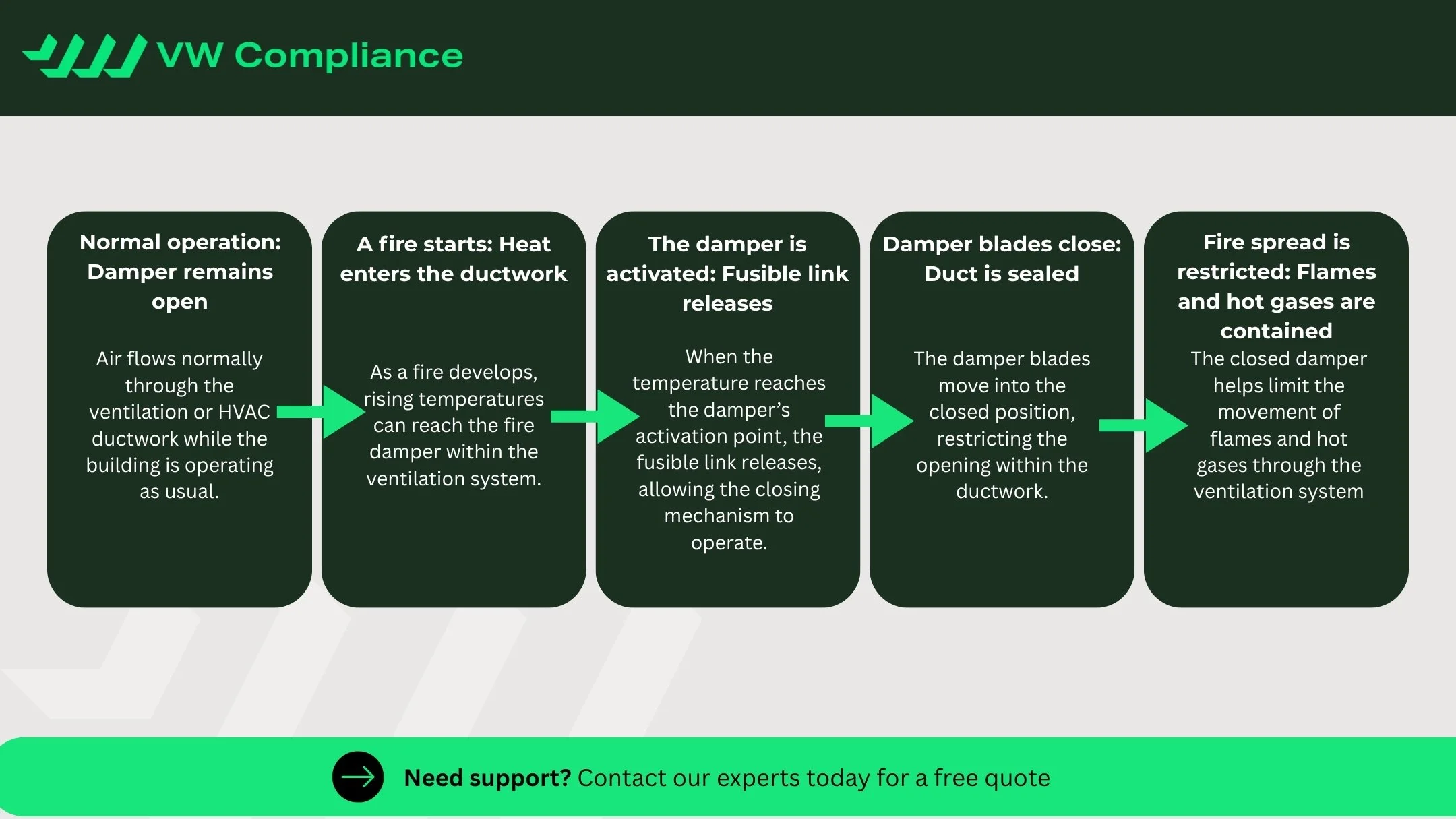
Under normal building conditions, fire dampers remain open so air can move through the building’s ventilation and HVAC system. If a fire occurs and the surrounding temperature rises to a set level, the damper is activated and closes. This creates a barrier within the ductwork, helping to limit the movement of flames and hot gases in other areas of the building.
There are two common ways a fire damper can be activated:
Mechanical Activation (Fusible Links)
Many fire dampers use a fusible link to trigger the closing mechanism. The link is designed to release when it reaches a specified temperature, commonly around 72°c. Once activated, the mechanism allows the damper blades to move into the closed position, restricting the passage of fire through the ductwork.
Motorised Activation (Actuators)
Some use an actuator, which can be controlled by the building’s fire alarm or detection system. When a fire or smoke detection signal is received, the actuator operates the damper and moves the blades into the closed position. This type of system is commonly found in more complex HVAC and fire protection installations.
Where Are Fire Dampers Installed?
Fire dampers are fitted within ventilation and HVAC ductwork where it passes through fire-resistant parts of a building, including compartment walls, floors and ceilings. By placing a damper at these points, the ventilation system can continue to operate normally while helping to protect the seperation between different areas of the building if a fire occurs.
The position and specification of a fire damper will vary depending on the building layout, ductwork configuration and overall fire safety strategy.
Why Are Fire Dampers Important?
Fire dampers play an important role in a building’s overall fire protection strategy. By closing during a fire, they help restrict the movement of flames and hot gases through ventilation systems, supporting the separation provided by fire-resistant walls, floors and other compartments.
They can also help protect the integrity of fire-rated ductwork and reduce the risk of fire spreading from one area of a building to another through the HVAC system. However, fire dampers are not designed to prevent a fire from starting, their purpose is to help limit the spread of fire once it occurs.
What Happens If a Fire Damper Doesn’t Work?
A fire damper needs to be able to close correctly to perform its intended function during a fire. If a damper is damaged, obstructed, poorly installed or has a faulty component, it may not operate as it should. This could allow flames, smoke and hot gases to travel through the ventilation system, potentially compromising fire compartmentation and allowing fire to spread quicker between areas of a building.
Several issues can affect the operation of fire dampers, including:
Dirt and debris: Dust, grease and other build-up can restrict the movement of the damper blades.
Corrosion: Exposure to moisture can cause components such as springs, hinges and linkages to deteriorate or sieze.
Faulty fusible links: A damaged or defective fusible link may prevent the damper from activating correctly when exposed to heat.
Poor maintenance: Without regular inspection and testing, faults, obstructions and deterioration can go undetected and affect the damper’s ability to operate when needed.
How Are Fire Dampers Tested and Inspected?
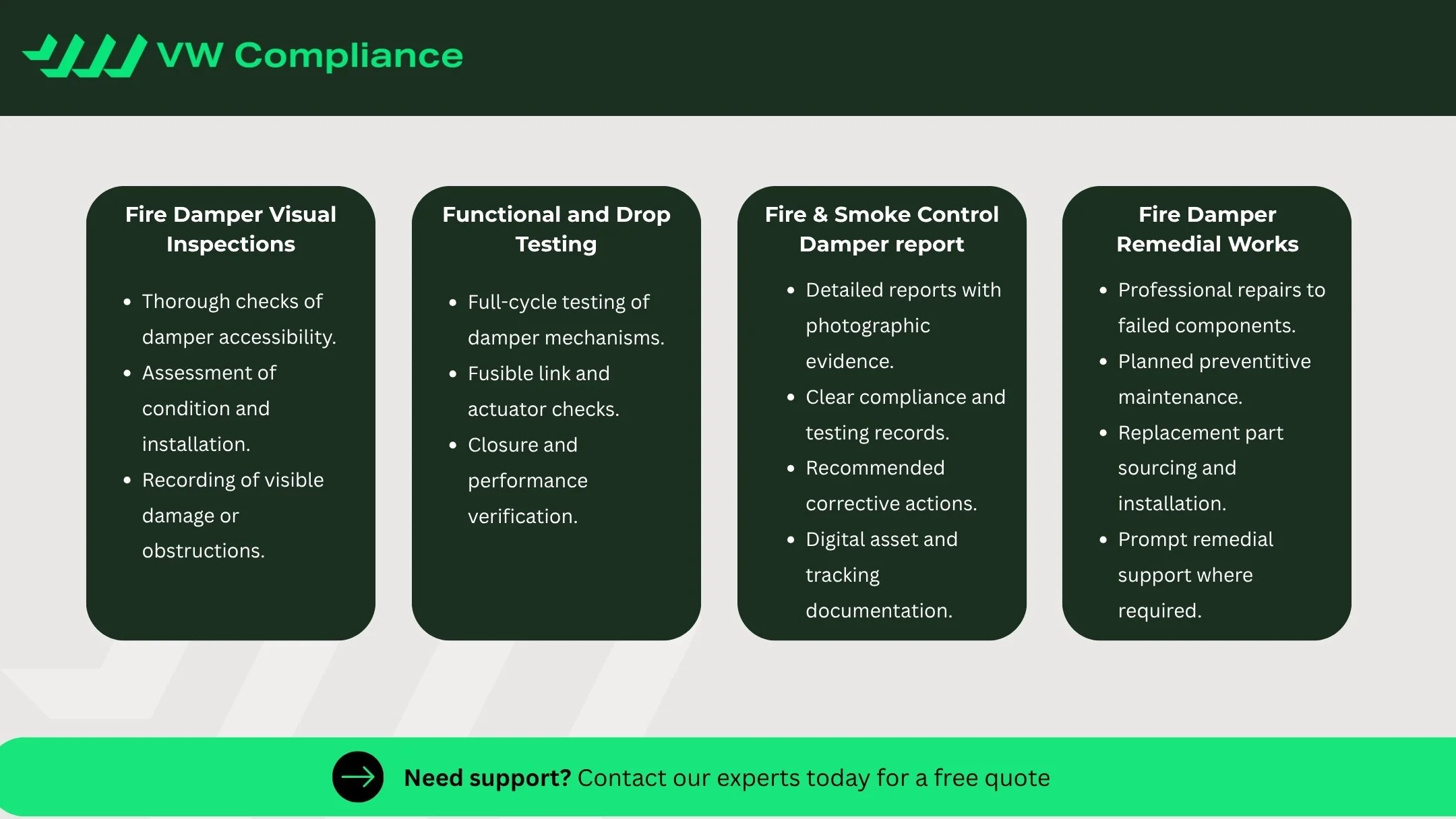
Regular fire damper testing is important to make sure each damper can operate correctly if a fire occurs. A qualified engineer will first locate the fire dampers and check that they can be safely assessed. The damper is then visually inspected for signs of damage, corrosion, contamination or anything else that could prevent it from operating correctly.
The testing process can include:
Visual inspection: Checking the damper, surrounding ductwork and installation for visible damage, obstructions or other issues.
Functional and drop testing: Operating the damper to confirm that the mechanism and blades move correctly and that the damper closes as intended.
Component checks: Inspecting components such as fusible links and actuators to make sure they are functioning correctly.
Cleaning and resetting: Removing any contamination where necessary and resetting the damper following testing.
Recording the results: Each damper is documented with its location, identification, test result and photographic evidence. Any failed, damage or inaccessible dampers are recorded, with recommendations for remedial work.
How Often Should Fire Dampers Be Tested?
Regular fire damper inspection and testing is important to ensure dampers remain in good working order and can operate correctly if a fire occurs. BS 9999:2017 recommends that fire dampers are inspected and tested every 12 months, while more frequent checks may be appropriate in environments where dampers are exposed to high levels of dust or pollution.
For healthcare premises, fire damper testing should also be carried out annually in accordance with HTM 03-01 guidance. Regular testing can help identify problems should as damage, corrosion, contamination or faults with the damper mechanism before they affect performance.
Keeping fire dampers properly maintained helps ensure they remain ready to operate when needed and supports the ongoing fire safety of the building.
Fire Damper Testing With VW Compliance
Regular fire damper testing helps ensure your fire dampers remain operational and able to perform their intended role in an emergency. At VW Compliance, our qualified engineers carry out thorough inspections and functional testing to assess the condition and performance of your fire dampers.
From visual checks and drop testing to detailed reporting and remedial recommendations, we provide a complete fire damper testing service tailored to your building. Our testing is carried out in line with recognised industry guidance, giving you clear records of the condition of your fire dampers and any further action required.
Need to arrange a fire damper testing? Contact VW Compliance today to discuss your requirements and request a quote.