
Indoor Air Quality: UK Standards, Testing and Ventilation
Maintaining good indoor air quality is essential for creating a healthy and comfortable environment for employees, visitors and other building occupants. However, dust, airborne pollutants and poorly maintained ventilation systems can affect the quality of air circulating throughout commercial buildings.
Understanding the causes of poor indoor air quality and how to identify potential problems is an important part of building maintenance. Through regular indoor air quality testing, ventilation inspections and professional ductwork cleaning, businesses can identify potential issues, maintain effective ventilation and help create a healthier indoor environment.
Contents:
What is indoor air quality?
Why is good indoor air quality important?
What are the indoor air quality standards in the UK?
How is indoor air quality tested?
How does ventilation and ductwork cleaning improve indoor air quality?
How can you improve indoor air quality in commercial buildings?
Maintain cleaner indoor air with VW Compliance
Frequently asked questions
What Is Indoor Air Quality?
Indoor air quality (IAQ) refers to the condition of the air inside and around buildings and how it affects the health, comfort and wellbeing of the people occupying them.
The quality of indoor air is influenced by several factors, including the presence of airborne pollutants, temperature, humidity and how effectively a building is ventilated. These factors can vary depending on the building’s location, its daily activities and the effectiveness of its ventilation systems.
Good indoor air quality means maintaining an indoor environment where pollutants are controlled, fresh air is adequately supplied and temperature and humidity are appropriately managed.
In commercial buildings, including offices, schools, healthcare facilities and industrial premises, understanding these factors is essential for maintaining a comfortable indoor environment and supporting the health and wellbeing of building occupants.
What Causes Poor Indoor Air Quality?
Poor indoor air quality is often caused by a combination of indoor pollution sources and inadequate ventilation, which allows contaminants to accumulate rather than being effectively removed or diluted.
Common causes of poor indoor air quality include:
Dust and airborne particles: Dust, fibres, pollen and other fine particles that can become suspended in the air.
Chemical pollutants: Volatile organic compounds (VOCs) and other gases released from cleaning products, furnishings, building materials and combustion appliances.
Moisture and mould: Excess humidity, damp conditions and poor moisture control can encourage mould growth and the release of fungal spores.
Inadequate ventilation: Insufficient fresh air circulation can allow indoor pollutants to build up, particularly in enclosed or heavily occupied areas.
Contaminated ventilation ductwork: Dust, debris and other contaminants can accumulate within poorly maintained ventilation systems, potentially affecting the cleanliness of the air being circulated.
External pollution, including traffic emissions and airborne particles, can also enter buildings and influence indoor air quality.
Why Is Good Indoor Air Quality Important?
Maintaining good indoor air quality is essential for protecting the health, comfort and wellbeing of people who spend time inside commercial buildings. With people spending much of their day indoors, exposure to airborne pollutants and inadequate ventilation can have a significant impact on their working and living environments.
Poor indoor air quality can affect building occupants in several ways:
Health and respiratory problems: Exposure to dust, allergens, mould, spores and chemical pollutants can trigger allergies, aggravate asthma and contribute to respiratory irritation.
Reduced concentration and productivity: Poorly ventilated spaces can contribute to headaches, fatigue and difficulty concentrating, potentially affecting productivity in offices and learning environments.
Increased risks for vulnerable occupants: Children, older adults and people with existing respiratory conditions may be particularly sensitive to indoor air pollution.
Damp and mould growth: Excess moisture and inadequate ventilation can encourage mould growth, affecting both occupant health and building conditions.
For offices, schools, healthcare facilities and other commercial premises, maintaining effective ventilation is an important part of managing indoor air quality. Regular ventilation inspections, maintenance and ductwork cleaning can help businesses keep their systems clean and functioning effectively.
What Are the Indoor Air Quality Standards in the UK?
In the UK, there is no single piece of legislation dedicated exclusively to indoor air quality. Instead, businesses must consider a combination of building regulations, workplace health and safety legislation and industry standards to support effective ventilation and healthier indoor environments.
The main indoor air quality standards and regulations relevant to commercial buildings include:
Building Regulations Approved Document F: Provides guidelines on meeting ventilation requirements in England, including the supply of fresh air and removal of indoor pollutants and moisture from buildings.
British Standard BS 40102-1: Provides a framework for measuring, monitoring and reporting indoor environmental quality in non-domestic buildings, including indoor air quality.
Workplace (Health, Safety and Welfare) Regulations 1992: Requires employers to ensure employees have safe working environments with sufficient quantities of fresh or purified air.
Understanding the requirements relevant to your premises helps businesses manage indoor air quality, maintain effective ventilation and meet their workplace responsibilities. Regular ventilation inspections and ductwork cleaning can support good ventilation hygiene as part of an ongoing building maintenance programme.
How Is Indoor Air Quality Tested?
Indoor air quality testing helps businesses identify airborne pollutants, assess ventilation effectiveness and understand the conditions affecting the air within their premises. For commercial buildings, regular air quality assessments can help identify potential problems and determine whether further investigation or ventilation maintenance is required.
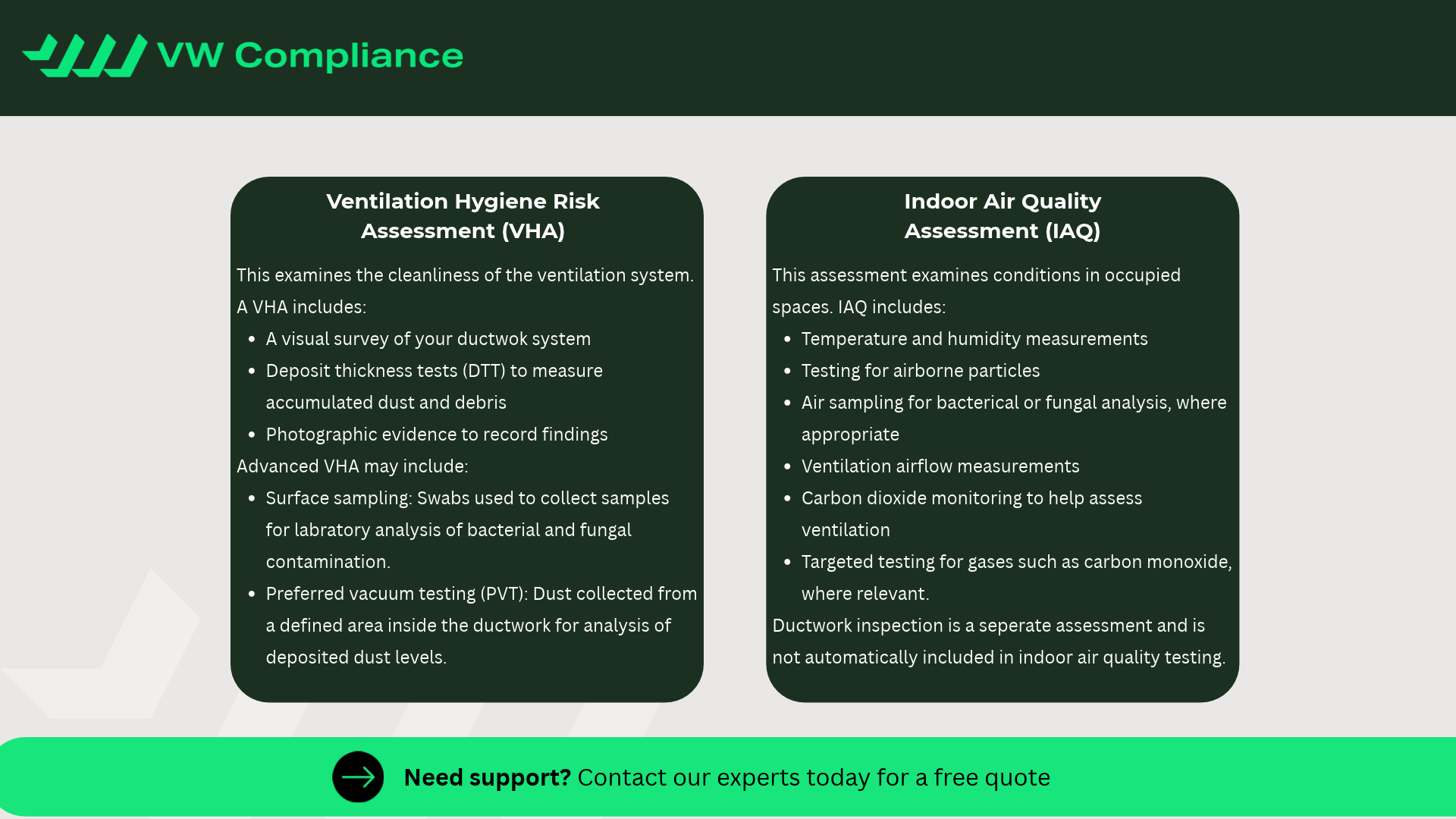
At VW Compliance, indoor air quality assessments can involve several testing methods, depending on the building and its requirements:
Temperature and humidity measurements: Assess indoor environmental conditions and identify excessive moisture that could contribute to mould growth.
Airborne particle testing: Measures particulate matter in the air to help identify potential sources of indoor air pollution.
Carbon dioxide (CO2) monitoring: Helps assess whether ventilation is providing sufficient fresh air for building occupants.
Air sampling: Where appropriate, samples can be collected for bacterial or fungal analysis.
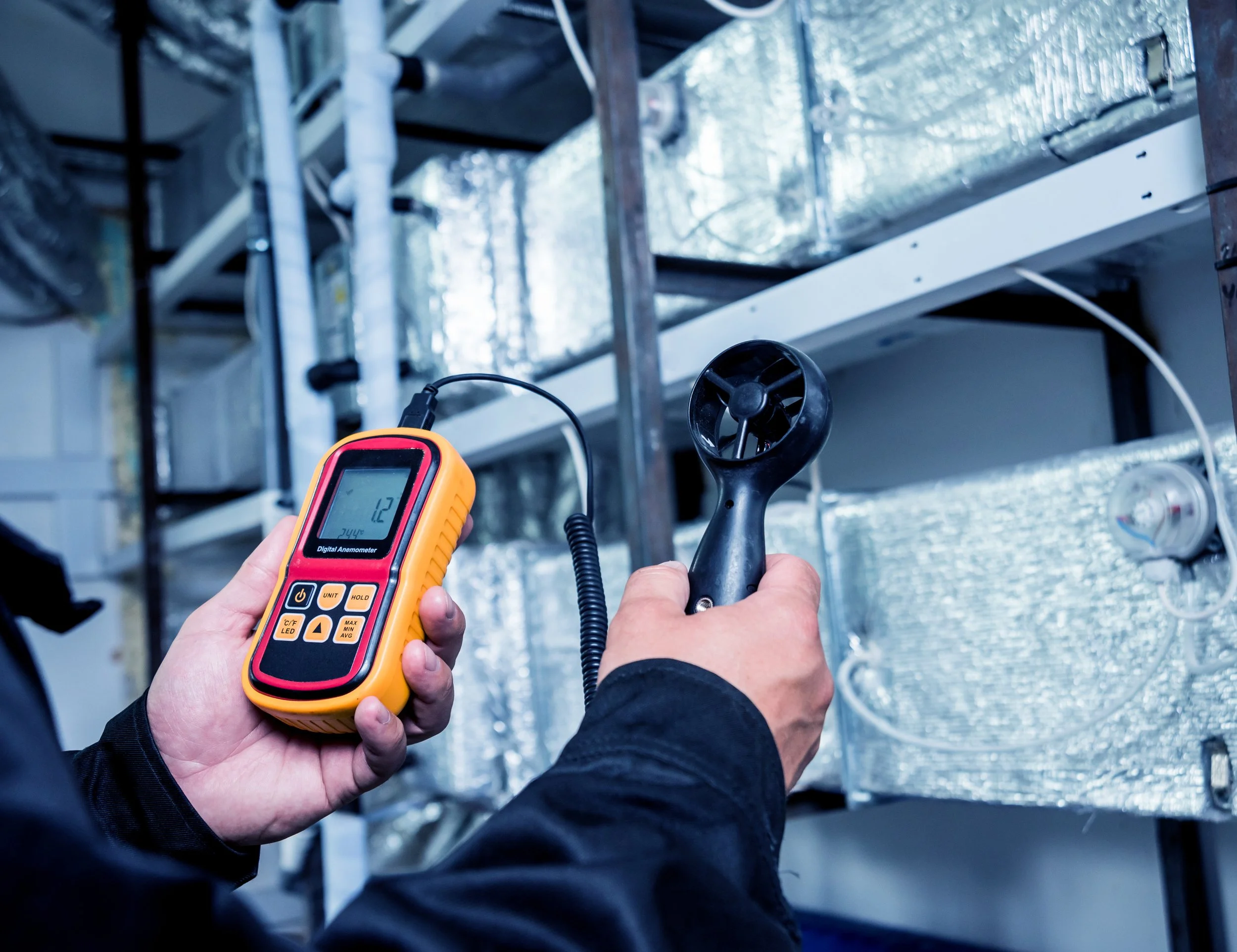
Ventilation airflow testing: Measures airflow to assess how effectively the ventilation system is operating.
Targeted gas testing: May include monitoring for gases such as carbon monoxide where specific risks have been identified.
Alongside indoor air quality testing, VW Compliance offers ventilation hygiene risks assessments to evaluate the cleanliness of commercial ductwork systems. These can include visual inspections, dust deposit thickness testing and photographic evidence, with additional sampling where required.
By combining appropriate air quality testing with ventilation hygiene assessments, businesses can gain a clearer understanding of their indoor environment and identify where ventilation cleaning or maintenance may be necessary.
Concerned about the air quality in your building? VW Compliance provides indoor air quality assessments and ventilation hygiene inspections to help identify potential issues and determine whether further action is needed.
Contact our team to discuss your testing requirements.
How Does Ventilation and Ductwork Cleaning Improve Indoor Air Quality?
Over time, dust, debris and other contaminants can accumulate within commercial ventilation systems, particularly when ductwork is not regularly inspected or maintained. As air circulates through the building, accumulated contaminants may become airborne, potentially contributing to poor indoor air quality.
Professional ventilation and ductwork cleaning helps remove these deposits, support cleaner ventilation systems and a healthier indoor environment.
The main benefits of regular ductwork cleaning include:
Removes accumulated contaminants: Clears built-up dust, debris and other deposits from ventilation ductwork.
Reduces allergens and irritants: Helps minimise the risk of accumulated dust and other particles entering the air supplied to occupied spaces.
Supports ventilation hygiene: Removes contamination that may contribute to microbial growth, although underlying moisture problems must also be addressed.
Maintains effective airflow: Helps prevent excessive debris from restricting airflow through ventilation systems.
Supports system efficiency: Removing significant contamination can help ventilation equipment operate more effectively, although energy savings depend on the condition of the system.
At VW Compliance, our specialist commercial ventilation and duct cleaning services help businesses maintain cleaner ductwork, manage contamination and support effective ventilation system maintenance.
How Often Should Ventilation Ductwork Be Cleaned?
There is no single cleaning interval suitable for every commercial ventilation system. As a general guide, commercial ventilation ductwork may require professional cleaning every 3-5 years, while high-use environments such as gyms, retail premises and healthcare facilities may need cleaning every 1-2 years.
Commercial kitchen extraction systems typically require more frequent cleaning, often every 3-12 months, depending on cooking activity and grease accumulation.
However, these are indicative timescales rather than fixed requirements. The appropriate frequency depends on the building’s usage, ventilation system, environmental conditions and level of contamination.
Regular ventilation hygiene inspections and testing are essential for assessing dust deposits, identifying potential contamination and determining when professional cleaning is necessary. Industry guidance can help businesses establish an appropriate inspection and cleaning programme.
VW Compliance provides specialist ventilation and duct cleaning services, helping businesses assess the cleanliness of their systems and arrange cleaning based on their condition and requirements.
How Can You Improve Indoor Air Quality in Commercial Buildings?
Improving indoor air quality in commercial buildings requires a combination of effective ventilation, regular maintenance and measures to reduce indoor air pollution. Businesses can take several practical steps to create a healthier indoor environment for employees, visitors and other building occupants.
Regular ventilation inspections and cleaning: Arrange professional ventilation hygiene assessments and ductwork cleaning where necessary to identify and remove accumulated dust, debris and other contaminants.
Monitor indoor air quality: Carry our indoor air quality testing to assess airborne pollutants, temperature, humidity and carbon dioxide levels, helping identify potential ventilation issues.
Maintain ventilation systems: Regularly inspect and replace air filters, maintain ventilation equipment and ensure ductwork remains clean and free from significant contamination.
Ensure adequate airflow: Check that ventilation systems provide sufficient fresh air and effectively remove stale air and pollutants. Professional airflow testing can help identify areas where ventilation performance may need improving.
Reduce sources of indoor pollution: Identify and control pollutants from cleaning products, building materials, combustion appliances and other activities within the premises.
Maintain Cleaner Indoor Air Quality with VW Compliance
Maintaining good indoor air quality starts with understanding the condition of your ventilation systems and identifying potential sources of contamination.
At VW Compliance, we work with building owners, facilities managers and businesses across Essex, London and throughout the UK, providing specialist indoor air quality assessments, ventilation hygiene inspections and professional ductwork cleaning.
Whether you’re concerned about poor indoor air quality or need to arrange routine ventilation maintenance, our team can help you assess your requirements and identify the appropriate next steps.
Concerned about your building’s indoor air quality? Contact VW Compliance today to discuss your ventilation testing and cleaning requirements.
Frequently Asked Questions
-
Common signs of poor indoor air quality include headaches, dizziness, eye, nose and throat irritation, respiratory discomfort and worsening allergy or asthma symptoms. Other indicators may include persistent odours, excessive dust, condensation and poor ventilation throughout a building.
-
There is no single UK law requiring routine indoor air quality testing in all commercial buildings. However, employers and building operators have legal responsibilities to maintain a safe and healthy indoor environment. Depending on the building’s use and potential risks, indoor air quality assessments or specific air monitoring may be necessary to demonstrate compliance with relevant health and safety regulations.
-
Yes, dust, debris and other contaminants can accumulate inside ventilation ductwork over time. If these contaminants become airborne, they can circulate throughout the building and contribute to poor indoor air quality. Regular ventilation inspections and duct cleaning, where necessary, can help reduce contamination and maintain a cleaner ventilation system.
-
Common signs that your ventilation system may need testing include poor airflow, persistent odours, excessive humidity, condensation and rooms that regularly feel stuffy or poorly ventilated. Changes to a building’s layout, occupancy or ventilation equipment may also indicate that airflow testing or a ventilation inspection is required to ensure the system is operating effectively.