
Legionella Risk Assessment for Hotels | What Hotel Managers Need to Know

Hotels face a unique challenge when it comes to Legionella. With hundreds of taps and showers, changing room occupancy, water storage and facilities such as spas, there are many opportunities for water to stagnate and bacteria to grow.
If these water systems are poorly managed, the risk of Legionella can increase. That’s why hotel managers and their teams need to understand where the risks are, how Legionella can develop and most importantly, how to control it.
A Legionella risk assessment is the starting point. It identifies potential risks within your water systems and the measures needed to keep them under control.
At VW Compliance, our water hygiene specialists carry out Legionella risk assessments in line with ACOP L8 and HSG274 guidance, helping hotels understand their risks and the actions required to manage them. In this guide we look at everything hotel managers need to know when it comes to controlling Legionella and preventing an outbreak of Legionnaire’s disease.
Contents:
Does a hotel need a Legionella risk assessment?
Why are hotels particularly at risk?
Where are the main Legionella risks in a hotel?
What happens during a hotel Legionella risk assessment?
The hotel manager’s key Legionella controls
Who is responsible for Legionella in a hotel?
How often should a hotel legionella risk assessment be reviewed?
Do hotels need Legionella water testing?
What Legionella records should hotels keep?
Does a Hotel Need a Legionella Risk Assessment?
Yes. If you're an employer or in control of hotel premises, you have a duty to identify and assess the risks associated with exposure to Legionella and where necessary, put suitable controls in place. A Legionella risk assessment is particularly important for hotels where water systems can be large and spread across guest rooms, kitchens, leisure facilities and other areas.
A Legionella risk assessment helps establish:
Where Legionella could grow
Who could potentially be exposed
Whether existing controls are effective
What monitoring and maintenance is needed
Whether remedial work is required
Think of your risk assessment as the starting point for managing Legionella in your hotel. It shows you where the risks are and what needs to happen next.
2. Why Are Hotels Particularly at Risk?
Legionella bacteria can grow in man-made water systems when conditions are favourable.
Risk can increase where:
Water becomes stagnant
Outlets are rarely used
Water temperatures support bacterial growth
Scale, rust, sludge or biofilm is present
Water is stored or recirculated
Showers or other equipment create water droplets
Hotels can experience several of these conditions at the same time. One of the biggest challenges is changing occupancy. While one guest room may be occupied every night, another could remain empty for days or weeks. Without appropriate management, the water sitting within those unused outlets and associated pipework can stagnate.
3. Where Are the Main Legionella Risks in a Hotel?
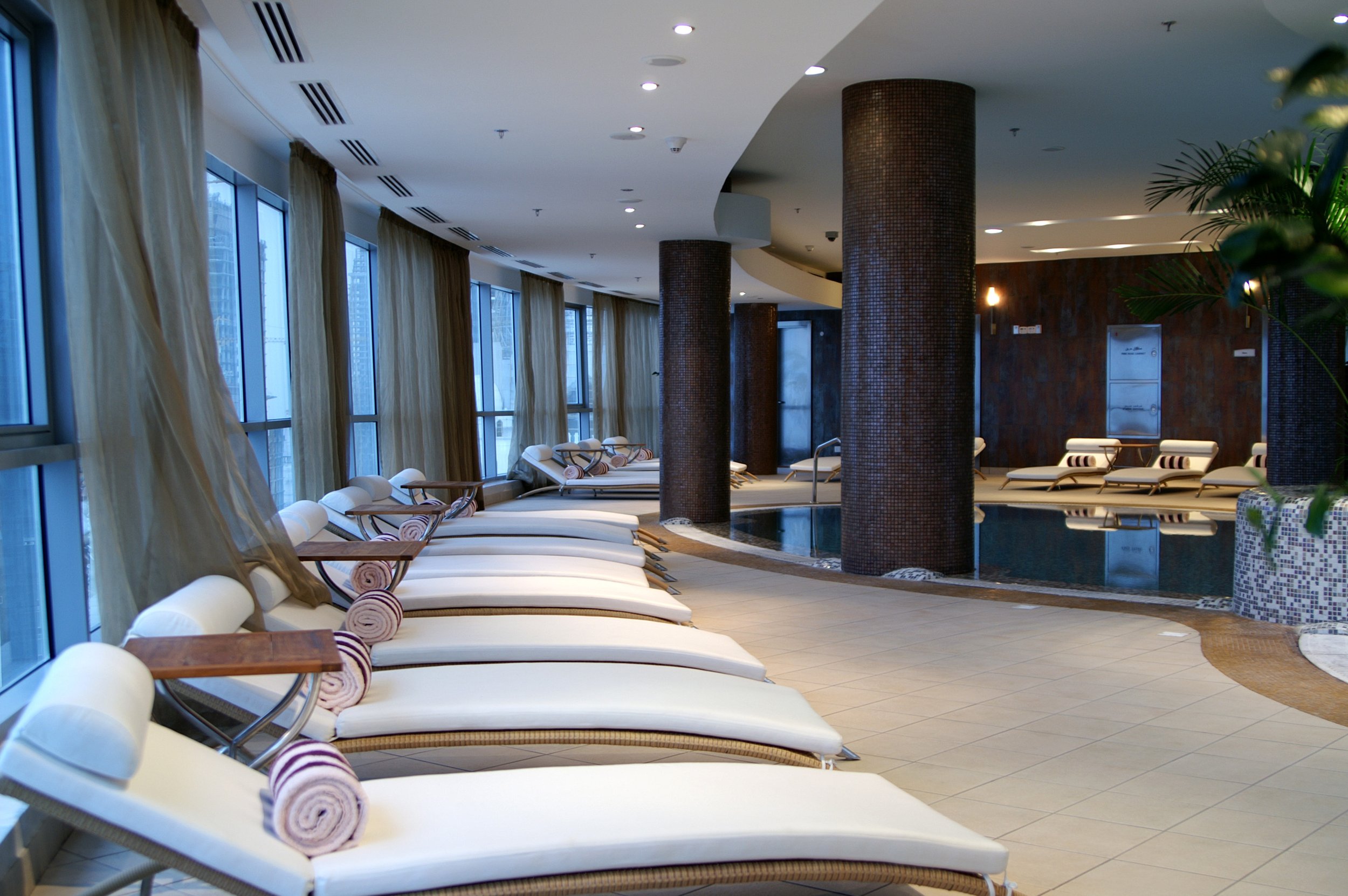
A Legionella risk assessment should look beyond the obvious taps or showers and consider the hotel's wider water systems. Legionella bacteria has the ability to contaminate water droplets, therefore any area of the hotel that has water present hosts a risk of people becoming exposed.
Areas that may need to be assessed include:
Areas that may need to be assessed include guest room showers and taps, unoccupied rooms, cold water storage tanks, hot water systems and calorifiers, shower heads and hoses, dead legs and redundant pipework, thermostatic mixing valves (TMVs), spa pools, hot tubs and water features. Larger hotels may also have cooling towers, evaporative systems, irrigation or misting systems that need to be considered.
Every property is different. A 20-room hotel will have very different water systems and risks from a large resort with hundreds of rooms, restaurants and leisure facilities. That’s why a Legionella risk assessment should always be specific to your hotel and its water systems.
4. What Happens During a Hotel Legionella Risk Assessment?
A professional Legionella risk assessment isn't simply checking a few taps and taking a water sample.
The assessor needs to understand how water moves through your hotel, where problems could develop and whether your existing controls are working.
-
The assessor will establish how water is supplied, stored and distributed throughout the property.
This can include reviewing:
Cold water storage
Hot water systems
Calorifiers
Distribution pipework
Showers and taps
TMVs
Other relevant water systems
Existing schematics, maintenance records and previous risk assessments can also help build a clearer picture of the system.
-
The system is inspected for conditions that could increase risk, including:
Stagnant water
Infrequently used outlets
Dead legs or redundant pipework
Scale and corrosion
Poorly maintained water storage
Inappropriate water temperatures
In a hotel, particular attention should be paid to areas that aren't regularly occupied or used.
-
Having a Legionella management programme is only useful if it's actually working.
The assessment may therefore review existing measures such as temperature monitoring, flushing programmes, shower head cleaning, tank inspections and maintenance records.
-
Following the assessment, you should understand what the risks are and what needs to happen next.
At VW Compliance, our reports set out the findings, risk levels and recommended actions, giving hotel managers a clear plan for managing their water systems.
5. The Hotel Manager's Key Legionella Controls
The risk assessment tells you what needs managing. The next step is making sure the required controls actually happen. For many hotel water systems, some of the most important areas are:
Keep Hot Water Hot
Where temperature is being used as the control method, hot water should generally be stored at 60°C or above and reach at least 50°C within one minute at relevant outlets. Regular monitoring helps confirm that the system continues to achieve the required temperatures.
Keep Cold Water Cold
Cold water should generally be maintained below 20°C where possible. Unexpectedly warm cold water can indicate a problem requiring further investigation.
Don't Forget Empty Rooms
This is one of the biggest practical issues for hotels. If a guest room remains empty, its taps and shower aren't being used. Infrequently used outlets should generally be flushed at least weekly to help prevent stagnation. Hotels should therefore have a reliable process for identifying unused rooms, carrying out the required flushing and recording that it has been completed.
Keep Showers Clean
Shower heads and hoses can accumulate scale and deposits and should be cleaned and descaled at an appropriate frequency. Because showers create fine water droplets that can be inhaled, they are an important part of hotel Legionella management.
Deal With Redundant Pipework
Hotel refurbishments and extensions can sometimes leave old sections of pipework connected to the system. If this creates areas with little or no water movement, remedial action may be required.
Who Is Responsible for Legionella in a Hotel?
Someone needs to take ownership of the control programme.
A competent Responsible Person should be appointed to oversee Legionella management. In a hotel, this could be the:
Hotel manager
Facilities manager
Engineering or maintenance manager
Health and safety manager
The person appointed needs sufficient knowledge, competence and authority to make sure the required controls are actually carried out.
External water hygiene specialists can provide assessments, monitoring and technical support, but the hotel still needs clear internal responsibility for managing the programme.
How Often Should a Hotel Legionella Risk Assessment Be Reviewed?
A common misconception is that a Legionella risk assessment automatically expires after one or two years. There is no single fixed interval that applies to every hotel. Instead, your assessment should be kept under review and reconsidered whenever there is reason to believe it may no longer be valid.
For example, following:
Hotel refurbishment or extension
Changes to the water system
New spa or water facilities
Changes in building use
Significant changes in occupancy
Changes to control measures
Monitoring indicating a problem
Significant changes in responsibility or personnel
The important question isn't simply “How old is our risk assessment?” but “Does it still accurately reflect our hotel today?”
Do Hotels Need Legionella Water Testing?
Not necessarily.
A Legionella risk assessment and Legionella water test serve different purposes.
The risk assessment looks at the overall water system, identifies hazards and establishes how those risks should be controlled.
Sampling tests water from specific locations for Legionella bacteria at a particular point in time.
Routine sampling isn't automatically required for every hotel's hot and cold water system. It may be appropriate where the risk assessment identifies a need, control measures aren't performing as expected or there are other reasons to investigate.
Most importantly, a negative Legionella test doesn't replace effective ongoing water management.
What Legionella Records Should Hotels Keep?
Good records help hotel managers confirm that required controls are actually being completed.
Depending on your control programme, these could include:
Legionella risk assessment
Written control scheme
Responsible Person details
Water temperature records
Flushing records
Shower cleaning and descaling
Tank inspections
Maintenance records
Sampling results, where required
Completed remedial works
Records also make it easier to identify recurring issues and demonstrate that Legionella risks are being actively managed.
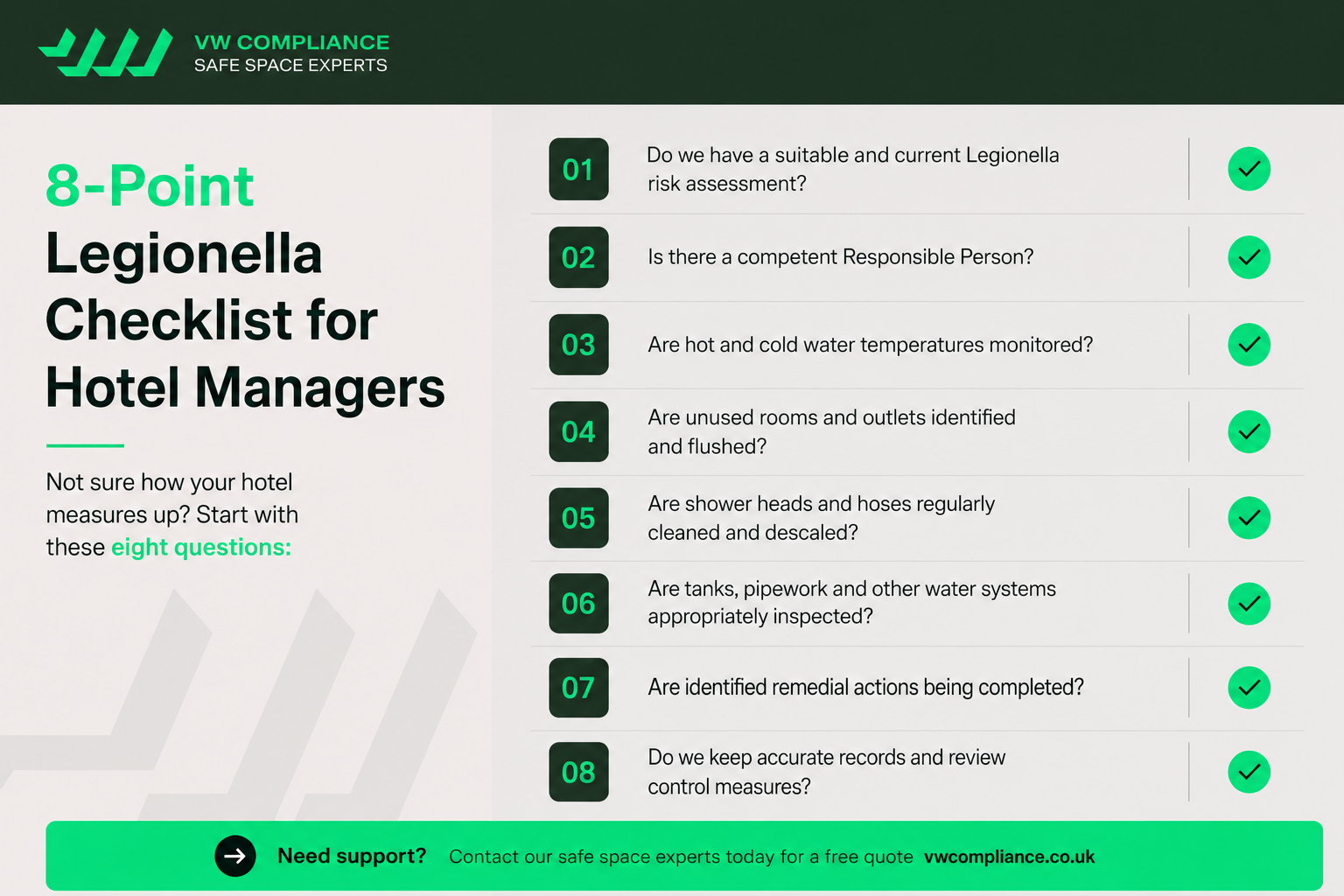
8-Point Legionella Checklist for Hotel Managers
Is Your Hotel's Legionella Risk Assessment Up to Date?
Managing Legionella isn't about completing a risk assessment and filing it away. It's about understanding your hotel's water systems and making sure the recommended controls continue to work.
VW Compliance provides Legionella risk assessments and ongoing water hygiene support for hotels and commercial premises across the UK, helping you identify risks, understand the actions required and maintain an effective control programme.
Not sure whether your hotel's current Legionella risk assessment is still suitable? Speak to VW Compliance today for expert advice or a free quote.