
How Often Should Commercial Kitchen Ventilation Be Cleaned? | Complete Guide
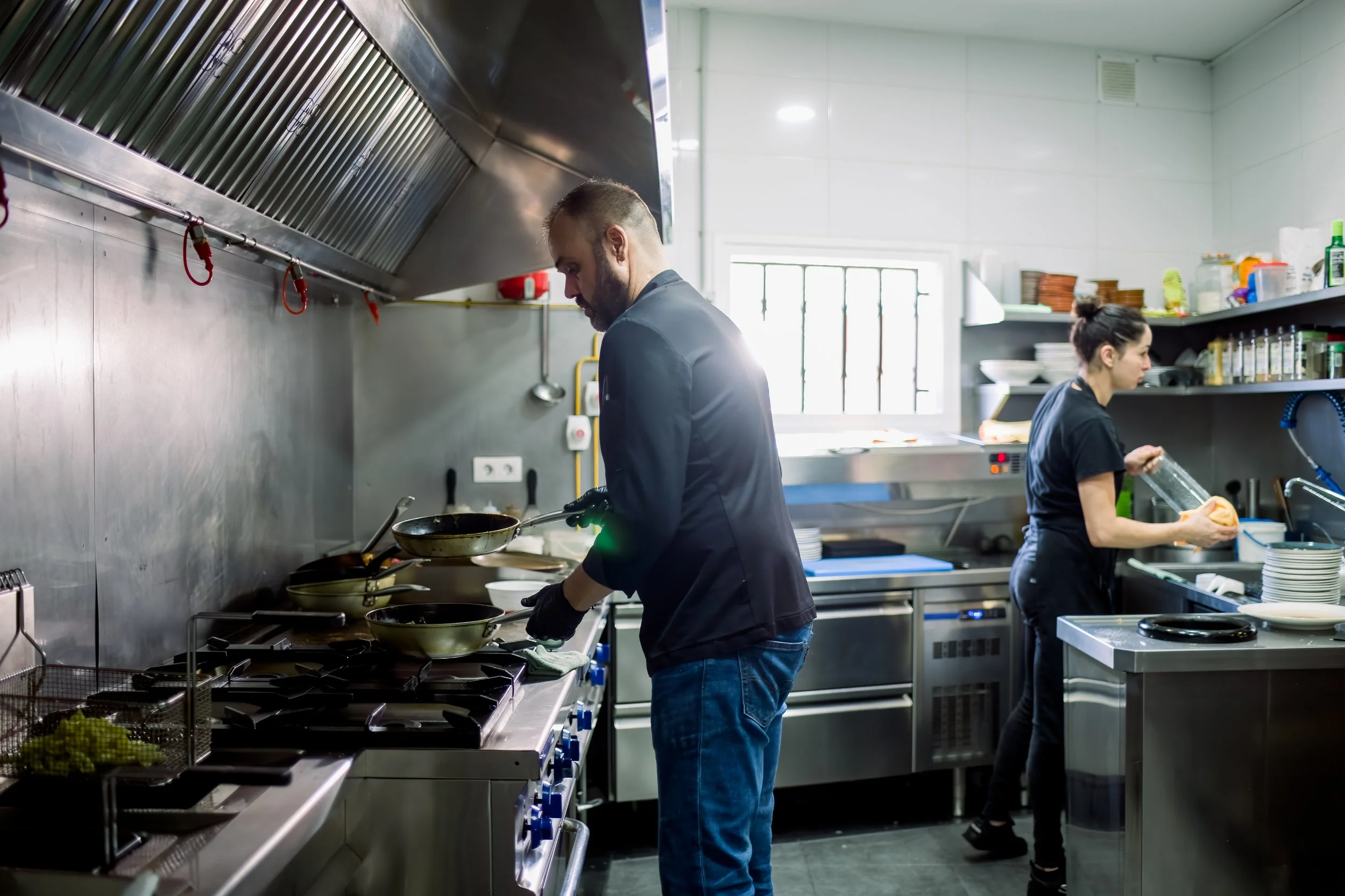
In a busy commercial kitchen, grease doesn’t just collect on visible surfaces. It is also drawn into the extraction system, where it can build up inside ductwork and fans, increasing fire risk and affecting performance.
That’s why kitchen extract cleaning isn’t a one-off job. It needs to be carried out regularly- but how often?
At VW Compliance, our SafeContractor-approved engineers have been cleaning commercial kitchen extract systems for eight years. As a BESA Vent Hygiene Register (VHR) accredited provider working to TR19® Grease, we understand how these systems should be cleaned and how often it needs to be done.
In this guide, we explain how often your system should be cleaned, what legislation needs to be followed and what a professional clean involves.
Contents:
How often should kitchen ventilation be cleaned?
What is TR19® grease?
What affects how often your kitchen extract needs cleaning?
Why is regular kitchen extract cleaning important?
Who is responsible for kitchen extract cleaning?
Is cleaning the kitchen filters enough?
What are the signs my kitchen extract needs cleaning?
What does a professional kitchen extract clean involve?
How Often Should Commercial Kitchen Ventilation Be Cleaned?
The simple answer is that it depends on how heavily your kitchen is used and the degree of smoke, grease and heat produced whilst cooking.
TR19® Grease provides recommended minimum cleaning frequencies based on daily usage, to mitigate the risk of a fire and maintain hygiene.
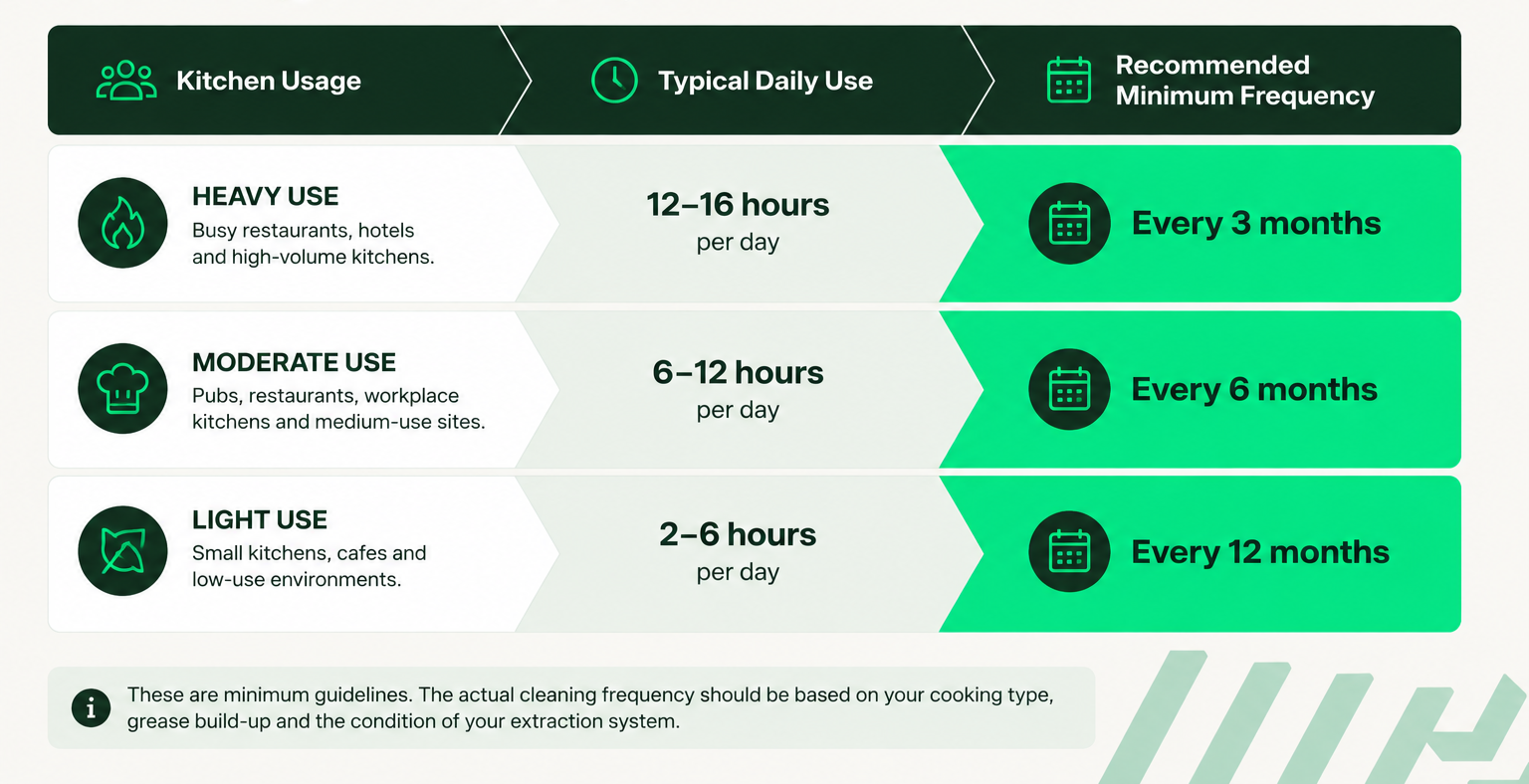
Therefore a busy restaurant or hotel kitchen operating throughout the day may therefore need cleaning every three months, whilst a cafe which is a low-use environment will typically need an annual clean.
Please note that these intervals are a starting point. The right cleaning schedule should be based on your individual kitchen and how quickly grease builds up within your system.
2. What Is TR19® Grease?
TR19® Grease is the recognised industry specification from the Building Engineering Services Association (BESA) for managing grease-related fire risks in commercial kitchen extraction systems.
It provides guidance on how kitchen extract systems should be inspected, cleaned and maintained.
This matters because grease doesn't simply collect in the extractor hood. It can travel through the entire extraction route, including the:
Canopy
Filters
Plenum
Ductwork
Extraction fan
Regular cleaning in line with TR19® Grease helps remove these deposits and provides businesses with evidence that their extraction system is being appropriately maintained.
3. What Affects How Often Your Kitchen Extract Needs Cleaning?
Operating hours are important, but they aren't the only thing to consider. For example: Two kitchens could operate for the same number of hours and still build up grease at very different rates.
Your cleaning frequency can be affected by:
Type of cooking- frying, grilling and other high-temperature cooking methods can produce greater amounts of airborne grease.
Volume of cooking- a busy restaurant serving hundreds of meals may require more frequent cleaning than a smaller kitchen.
Operating hours- the longer your kitchen operates, the more grease and cooking fumes the extraction system is exposed to.
Grease build-up- previous inspections can show how quickly deposits are accumulating.
System design- the size, layout and accessibility of the extraction system can affect its maintenance requirements.
Previous findings- if significant grease is repeatedly found before the next scheduled clean, the cleaning frequency may need to increase.
This is why your cleaning schedule should reflect the actual condition of your system, rather than simply booking the same interval each year.
4. Why is Regular Kitchen Extract Cleaning Important?
-
This is the biggest reason to keep a kitchen extraction system clean.
Grease is combustible. When deposits are allowed to accumulate inside ductwork, they can provide fuel for a fire and potentially allow flames to spread through the extraction system.
Regular professional cleaning removes this build-up and helps reduce the risk.
-
Grease and contamination can also affect airflow.
A clean extraction system can more effectively remove heat, smoke, fumes and airborne contaminants from the kitchen, while reducing unnecessary strain on extraction equipment.
-
Grease can accumulate in areas kitchen staff can't easily see or reach.
Keeping the wider extraction system clean helps maintain a more hygienic environment and can reduce persistent cooking odours.
-
Professional kitchen extract cleaning also creates a record of the work completed.
This documentation can be important when demonstrating that your extraction system is being appropriately maintained to insurers, fire risk assessors and other relevant parties.
5. Who is Responsible for Kitchen Extract Cleaning?
Within the Regulatory Reform (Fire Safety) Order 2005, those responsible for commercial premises have duties to identify and manage fire risks.
Depending on the premises, ‘the responsible person’ could be the employer, owner or another person with control of the building.
As grease accumulation within a kitchen extraction system can create a fire hazard, its inspection and maintenance should form part of the wider approach to fire safety. Therefore, using a professional contractor to complete the cleaning doesn't remove the importance of keeping accurate records. Businesses should know:
When the system was last cleaned
What work was completed
Whether any remedial action was recommended
That there is up-to-date documentation to hand
6. Is Cleaning the Kitchen Filters Enough?
No. Regularly cleaning filters and visible surfaces is an important part of everyday kitchen maintenance but grease can travel beyond the areas your staff can easily reach.
A typical kitchen extraction route looks something like this:
Canopy → Filters → Plenum → Ductwork → Extraction Fan → Discharge
If grease has accumulated further along this route, cleaning the canopy and filters alone won't remove it.
Professional kitchen extract cleaning should therefore consider the whole accessible extraction system, not just the parts that are visible from the kitchen.
7. What Are The Signs My Kitchen Extract Needs Cleaning?
You don’t necessarily need to wait until your next scheduled clean if the system is showing signs of excessive grease build-up. If you’re seeing any of the following signs, to may be time to have the system professionally inspected.
Look out for:
Visible or excessive grease around the canopy and filters
Grease deposits inside accessible ductwork
Reduced extraction or airflow
Smoke or fumes lingering in the kitchen
Persistent cooking odours
Unusual or increasingly loud fan noise
Heavy contamination identified during an inspection
Your recommended cleaning date having passed
8. What Does a Professional Kitchen Extract Clean Involve?
A professional clean goes much further than wiping down the extractor hood.
At VW Compliance, we systematically inspect and deep-clean accessible parts of the extraction system, including:
Canopies
Filters
Ductwork
Extraction fans
Grease and combustible deposits are removed to help restore cleanliness and reduce fire risk throughout the accessible extraction route.
Just as importantly, the work is documented. Following our kitchen extract cleaning service, clients receive a TR19® certificate report with remedial recommendations, providing a clear record of the work completed and highlighting any areas that may need further attention.
Don’t Leave Your Kitchen Extract Cleaning to Chance
Stay ahead of grease build-up, fire risk and compliance requirements.
As a BESA VHR-accredited provider, VW Compliance delivers professional TR19® kitchen extract cleaning backed by clear reporting, certification and expert guidance on the right cleaning schedule for your system.
Protect your kitchen and stay inspection-ready. Speak to our team today or request a free quote.