
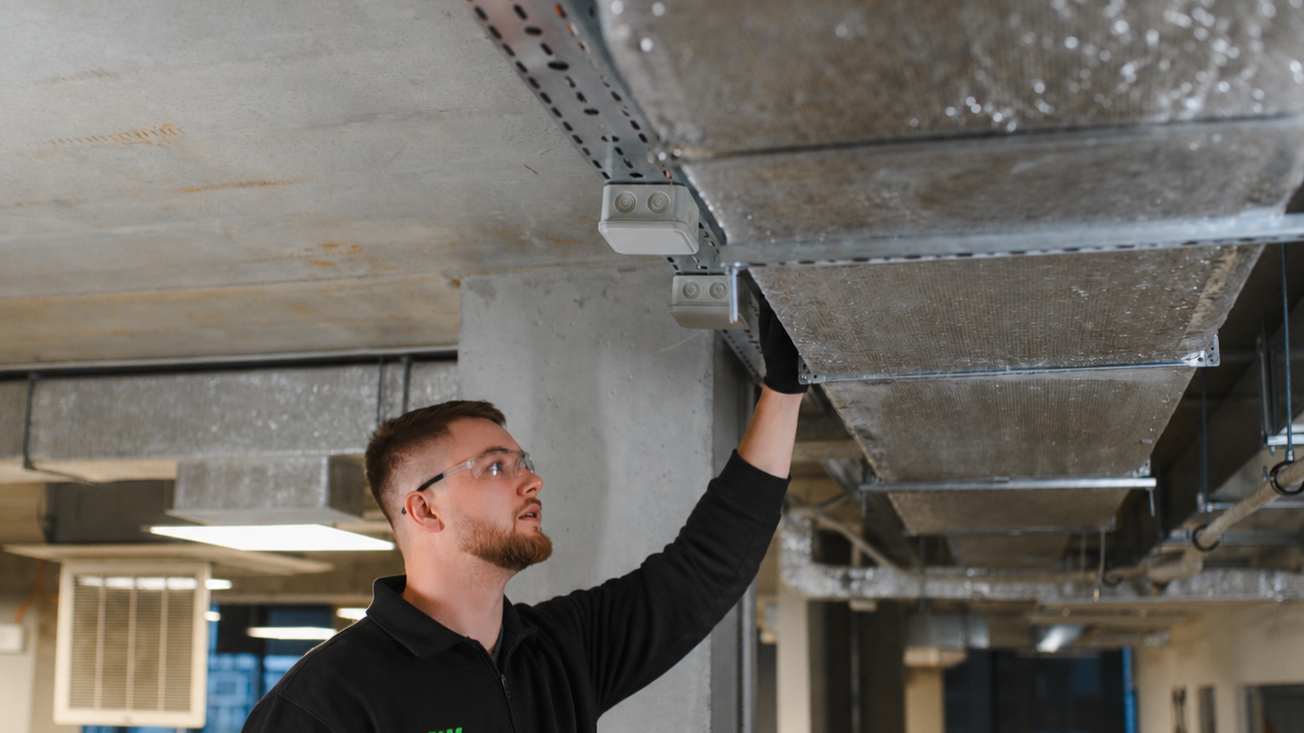
Fire Damper Remedial Work | Repair
Fire Damper Remedial Works
Has a fire damper failed its drop test or been marked as inaccessible? VW Compliance offers specialist fire damper remedial works, helping facility managers and building owners resolve defects found during fire damper inspections. With over 37 years of experience our team of engineers help your building remain compliant, sustaining reliable fire compartmentation.
Our Essex-based team supports commercial and public-sector buildings in London, Essex and throughout the UK.
UK fire damper remediation
Fire Damper Remediation for Failed, Damaged and Inaccessible Dampers.
Fire dampers are a crucial part of your buildings make-up, helping limit the spread of both fire and smoke through your buildings ventilation system. If your fire dampers become damaged, inaccessible or non-compliant, this compromises that protection, exposing your property and its occupants to significant health and safety risks.
At VW Compliance, our expertise in fire damper remedial works means we help restore fire damper systems back to the highest standard of compliance, ensuring they operate effectively in the case of a fire. We offer repairs and replacements of damaged dampers, alongside improvements in access solutions as well as amending failed function tests. Our experienced team of engineers provide compliant solutions bespoke to your property.
Repairs for fire dampers that fail drop tests
Replacement parts for damaged or faulty components
Improved access for future inspections and maintenance
Retesting and documented results for your fire safety records
Get Your Free Quote Today
Fill out the form below and a member of our team will be in touch shortly to discuss your fire damper remediation requirements.
What Are Fire Damper Remedial Works?
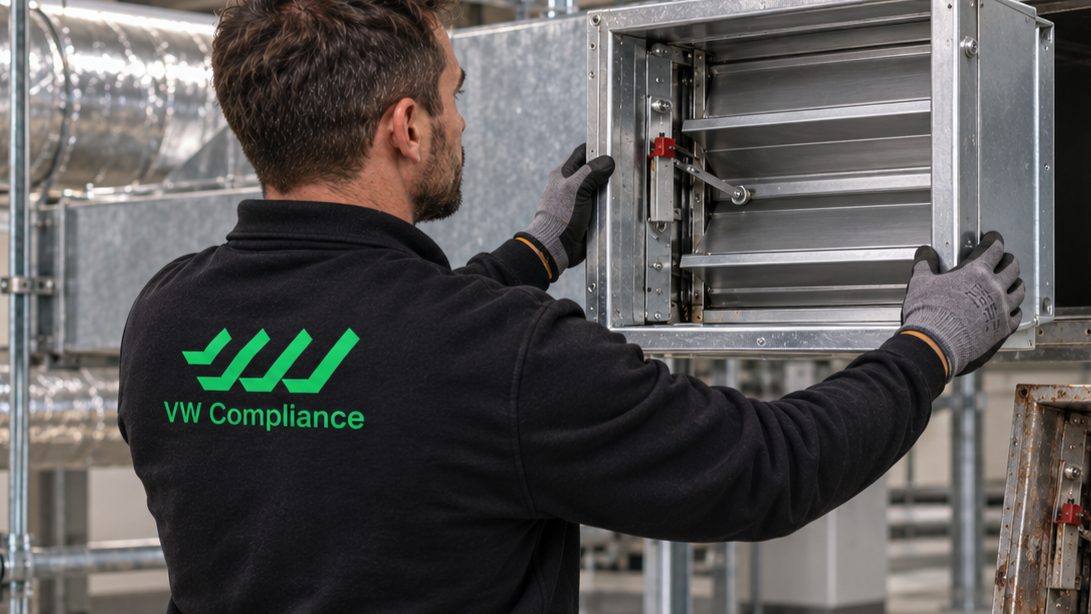
Fire damper remedial works are repairs or replacements carried out to fix faults found during a fire damper inspection or test.
A fire damper sits inside ventilation ductwork where it passes through a fire-resistant wall or floor. It closes in a fire to help stop flames spreading through the ductwork into other parts of the building. If the damper sticks, fails to close fully or is damaged, remedial work may involve repairing faulty components, correcting installation defects or replacing the damper. The damper is then retested to confirm it operates correctly.
Within the Regulatory Reform (Fire Safety) Order 2005, the responsible person is legally obliged to ensure that any defects noticed within a fire safety system is rectified immediately for building safety.
our services
Specialist Fire Damper Remedial Works Covering Every Stage
Our engineers are experienced in a wide range of fire damper remediation, following a thorough 4-step process to guarantee fire safety compliance.
01 Diagnosis
Find out why the fire damper failed
02 Repair assessment
03 Remedial Works
04 Re-testing and Reporting
Speak to an expert
Start your journey to compliance today.
fire and smoke control damper report
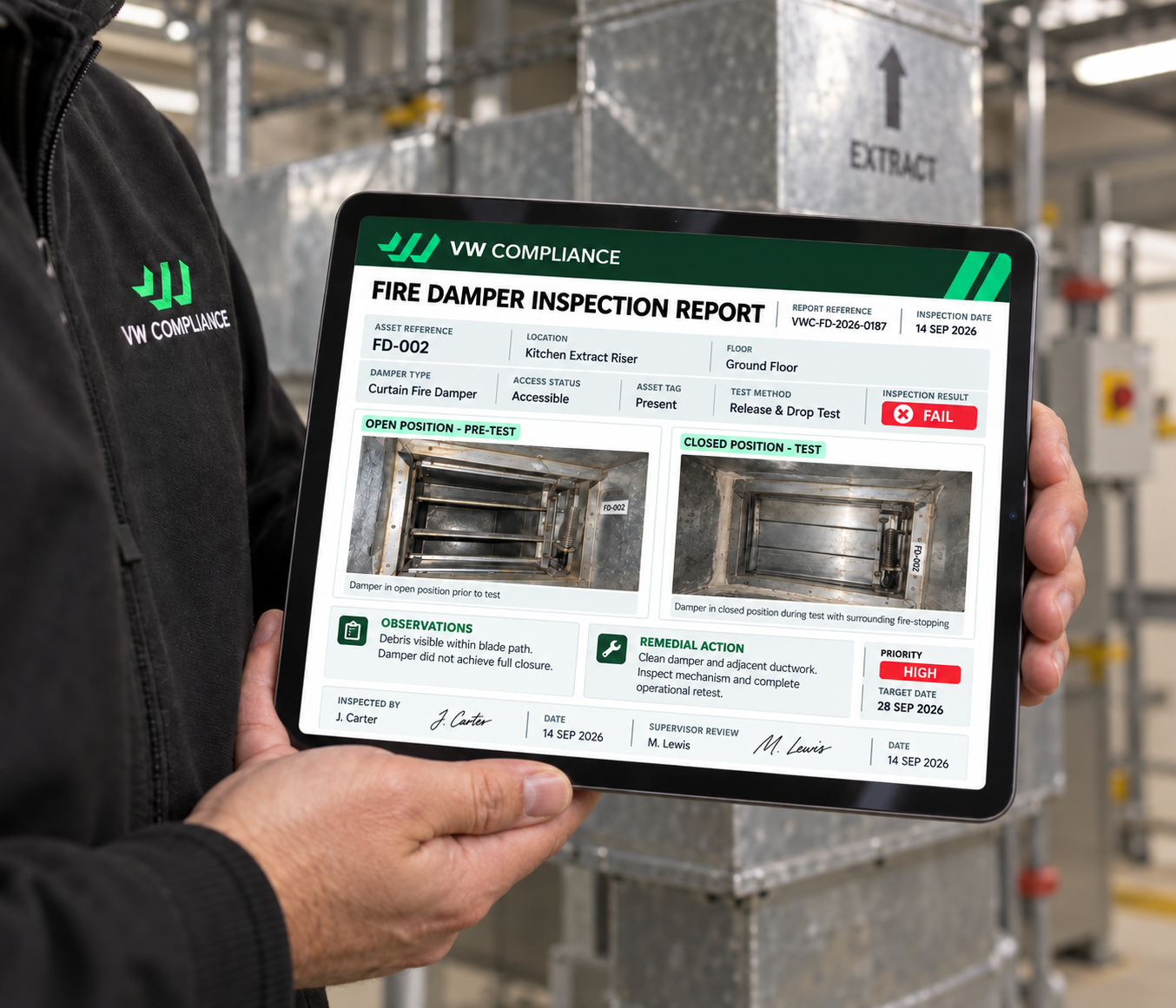
What’s Included in Your Compliant Fire Damper Report
A compliant fire damper testing report will include:
Damper location and ID: The location, asset number and type of each fire or smoke damper tested.
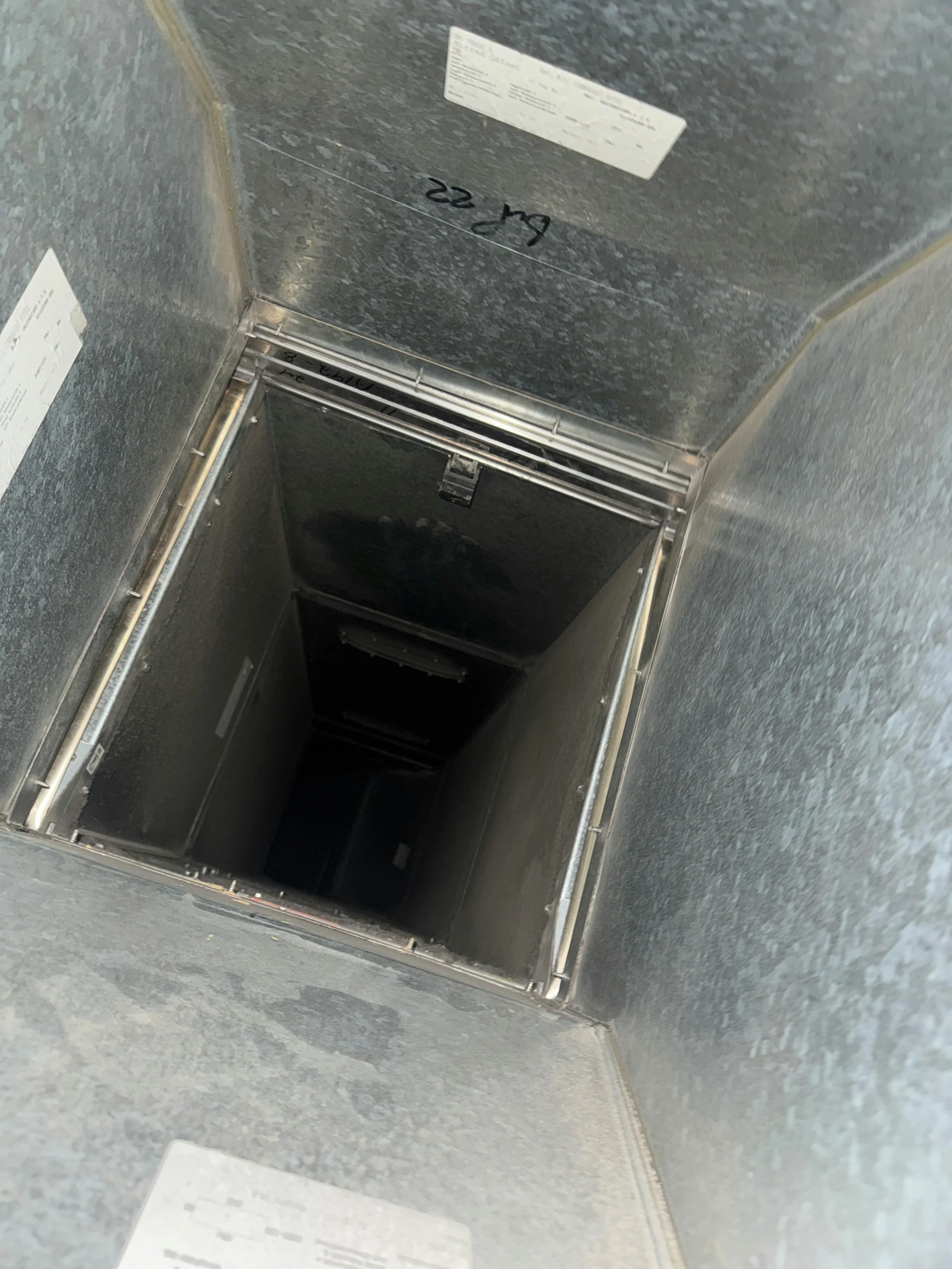
Access details: Confirmation of whether the damper was accessible, with photographs and recommendations where access was not possible.
Inspection findings: Notes covering the damper’s condition, installation and any defects identified.
Test results: A clear pass-or-fail result for every damper.
Remedial recommendations: Details of any repairs or further work required for failed, inaccessible or non-compliant dampers.
Photographic evidence: Images showing the damper before, during and after testing, including its open and closed positions where possible.
Professional sign-off: A dated record confirming who completed and reviewed the inspection.
fire damper maintenance experts
Fire Damper Maintenance Guidelines
Regular maintenance is essential to ensure fire dampers remain operational and can effectively restrict the spread of fire and smoke during an emergency. BS 9999:2017 recommends that fire dampers are inspected and tested at intervals not exceeding 12 months, with more frequent checks in dusty or polluted environments. In healthcare premises, annual testing should also be carried out in accordance with HTM 03-01 guidance.
Routine testing helps identify faults, prevent unnecessary wear and extend the working life of fire dampers. Most importantly, it provides reassurance that they will protect occupants and contain a fire when required.
Read our detailed guide on how often fire dampers should be tested in the UK to learn more.
Who We Work With
VW Compliance is trusted to deliver fire damper testing across commercial sites, from single sites to large-scale environments. We’re trusted by:


Experts in Fire Damper Testing
Ready to ensure your fire dampers are compliant and operating as they should?
Get in touch with VW Compliance today to arrange your testing, request a quote or speak with our team about our requirements. We’ll guide you through the process and provide a clear, compliant solution tailored to your building.
Prefer to speak to an advisor right away?
Call us on: 01268 690431 and we’ll be happy to help
Request a Callback
Fire Damper Testing: Areas We Cover
VW Compliance provides specialist fire and smoke damper testing across Essex and nationwide, delivering a reliable and professional service for organisations across a wide range of sectors.
With 37 years of combined expertise, our specialists support housing associations, councils, hospitals, care homes, hotels, restaurants, schools and facilities management companies . All testing is completed in line with BS 9999:2017, supported by detailed reporting and remedial recommendations to help keep your fire dampers compliant, effective and ready to operate when needed.
Basildon
Braintree
Brentwood
Cambridge
Cambridgeshire
Canvey Island
Colchester
Dartford
Grays
Harlow
Ipswich
Kent
Maidstone
Manchester
Norfolk
Norwich
Southampton
Southend-on-Sea
Suffolk
Thurrock
Fire Damper Testing Frequently Asked Questions
-
The simple answer is yes it is a legal requirement– and regularly. There is a duty of care on those responsible for fire dampers to make sure they are both regularly tested, and tested when they are first installed on the premises.
British Standard (BS) 9999 2017 stipulates that any dampers installed require more frequent testing than previously thought (as mentioned above they need to be at least tested annually). The use of buildings code of practice ensures those responsible must make sure to test fire safety systems and to maintain them routinely.
Fire protection cannot be provided if devices/tools are faulty/out of date, thus proving the importance of testing fire dampers and ensuring they are cleaned to an optimal working condition.
-
A fire damper is a crucial component of a building's fire safety system. It’s installed in ductwork to prevent the spread of fire and smoke between rooms. When exposed to high temperatures, the damper automatically closes to contain the fire, protecting occupants and the structure. Regular inspections ensure that these dampers function correctly in an emergency.
-
In the UK, fire dampers must be inspected and tested at least once a year, as per building regulations (BS 9999). This ensures they remain fully operational and free of blockages or damage that could prevent them from working in an emergency.
-
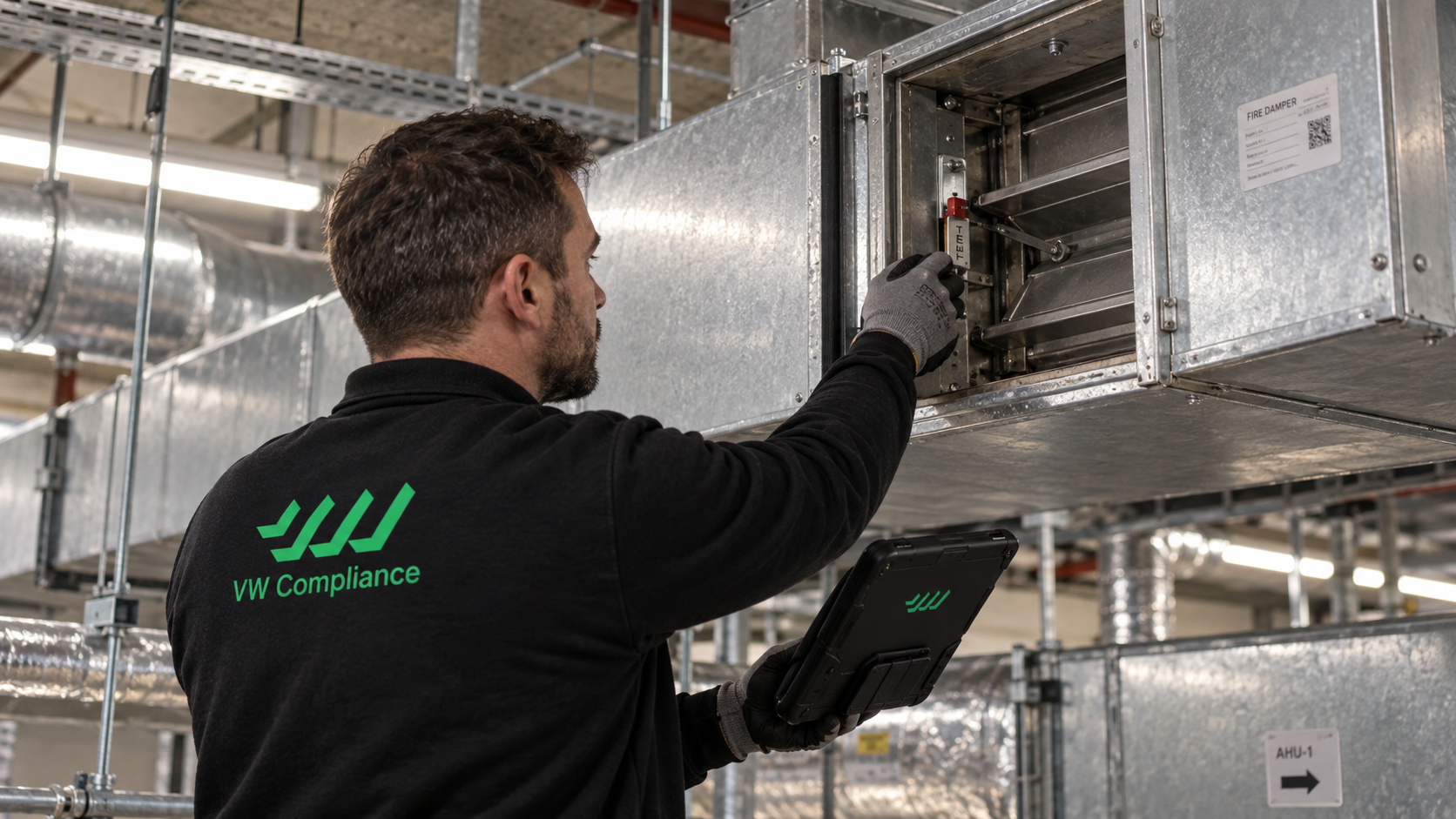
During an inspection, a qualified engineer will locate and access the fire dampers within the ductwork, then test each one to ensure it closes properly. They’ll also check for any obstructions, corrosion, or damage, and document the inspection results. Any issues will be reported, and repairs will be recommended if necessary.
-
The building owner or facility manager is typically responsible for ensuring fire and smoke dampers are tested and maintained in accordance with safety regulations. It is important to hire a qualified professional to carry out the inspections, ensuring compliance and building safety.
According to the Regulatory Reform (Fire Safety) Order 2005, it is the employer’s responsibility to maintain their fire safety systems.
As the buildings responsible person if you are made aware of faults to any fire safety equipment and do not act on them, you could be held responsible for any implications and be prosecuted in a court of law.
If you run a business or own a building it is your responsibility to book regular fire damper tests and ensures that a proper maintenance plan is followed.
-
Foreign materials such as dirt, combustible dust, and debris can accumulate within the ductwork. These foreign materials can impair the proper functioning of the fire dampers, leaving the building occupants at risk in the event of a fire. Typical issues also include obstructions to access the fire damper, poor installation hinges damage to parts , misalignment, bent tracks, damper coil spring twist, corrosion, heavy contamination or damaged frames or blades.
It might take only one faulty damper to allow the spread of a fire, therefore it is imperative annual fire damper testing (i.e. fire damper drop testing) and inspections are completed by competent engineers.